Most people only think about taxes when they are forced to - usually sometime between January and April, usually with a groan.
For a lot of people, it’s not the math that burns the time; it’s the paperwork: forms arriving as PDFs from different places, fields that won’t type properly, and numbers that have to be copied across multiple documents. Add in printing, scanning, and chasing signatures, and tax season starts to feel like a slow administrative obstacle course.
But ask people what new taxes or penalties they would introduce if they had the chance, and the responses get surprisingly sharp.
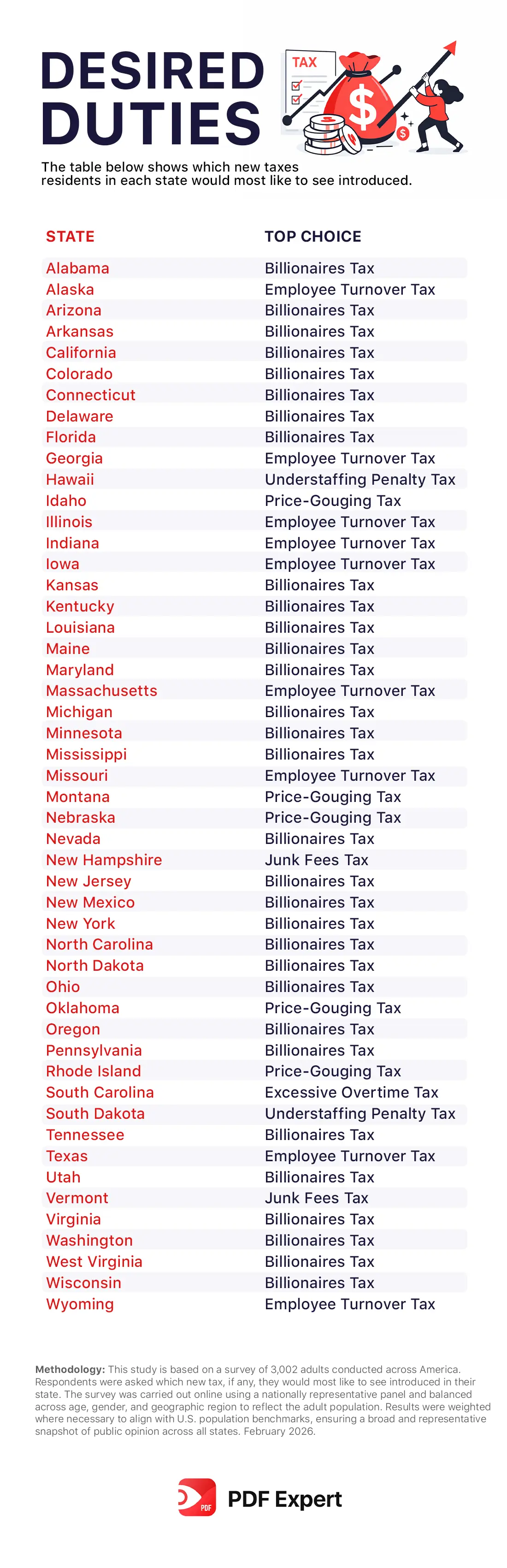
We asked over 3,000 adults for their opinions, and this is what we found:
Key Findings
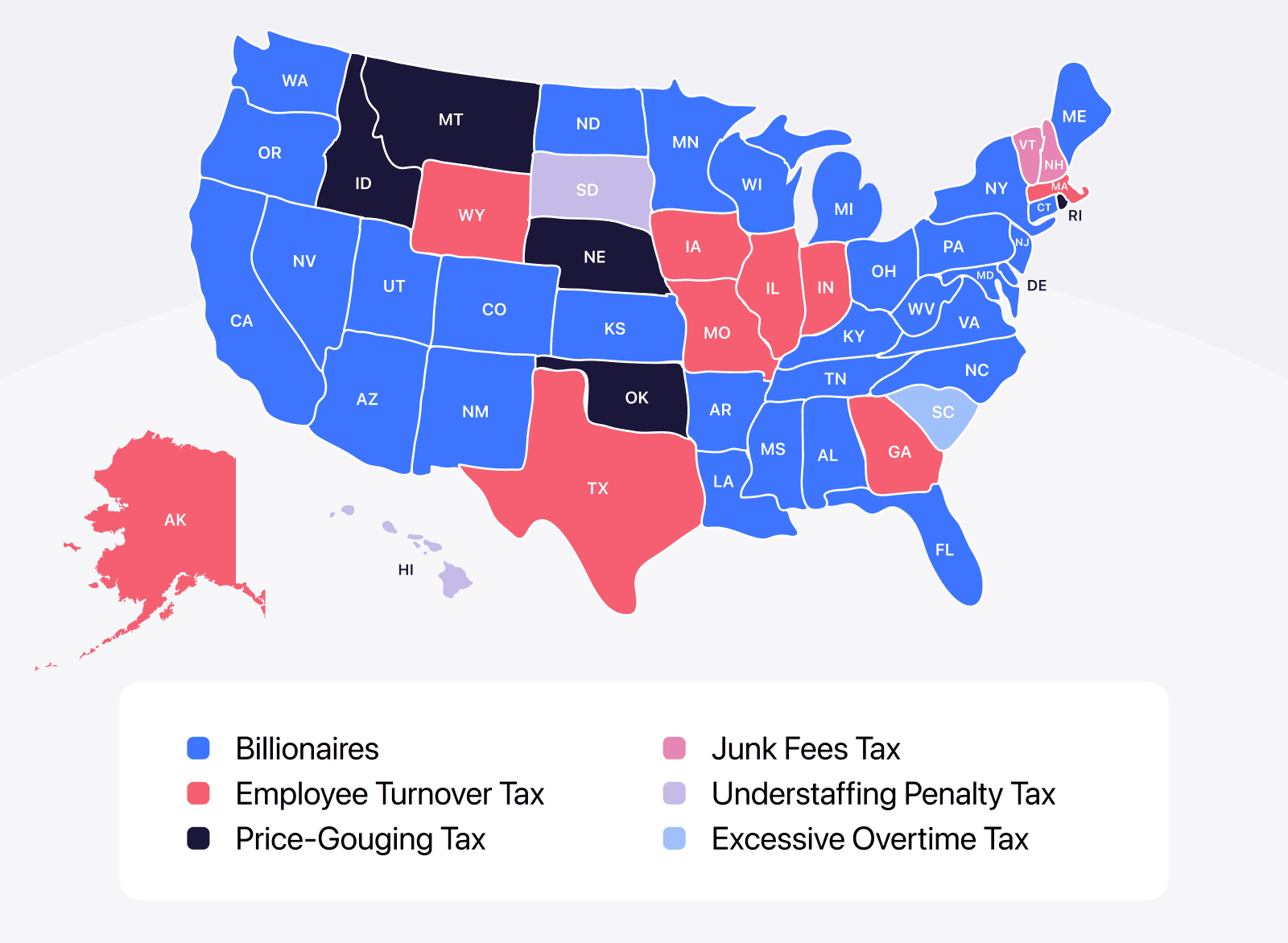
The Billionaires Tax is basically the default answer
You can go from Alabama to Wyoming, and the top of the list barely changes. The Billionaires Tax shows up first, or very close to first, almost everywhere.
It’s not subtle - people are clearly tired of the idea that extreme wealth floats above the rest of the system.
Even states that rarely agree on anything end up placing this one in the same spot. It’s the closest thing to a national “yes, obviously” moment in the whole dataset.
Price-Gouging hits a nerve in nearly every state
Inflation has upset people, and it shows. Price-Gouging Tax sits high across the board, and in a few states, it even takes the top position. Places like Idaho and Montana clearly feels it the most, but really, nobody is immune. It looks like people aren’t just annoyed by expensive groceries – they are concerned about why everything costs what it costs.
Employee Turnover taps something deeper than it seems
On paper, it sounds like an HR problem. In reality, people seem fed up with workplaces burning out staff, losing them, and then blaming “labor shortages.”
States with big service or logistics sectors really push this one up their lists. You can read between the lines: people are tired of instability, tired of constant new faces, and tired of companies that treat workers like they are replaceable.
Desire for a vacant-property tax tends to spike where housing is tight
It’s very noticeable in places where housing feels just out of reach - Hawaii, Colorado, Nevada, Maine. These are states with beautiful landscapes, lots of visitors, and locals who feel squeezed by second homes sitting empty.
The consistency here suggests something simple: people don’t mind outsiders visiting…but they mind being priced out by them.
Junk Fees Tax is the great equaliser, even if it’s not a top priority
It shows up everywhere - rarely at the top, but never at the bottom. That feels right. Nobody wakes up thinking about junk fees, but everyone has cursed one at some point.
Travel, ticketing, utilities…there’s always a surprise charge hiding somewhere.
Second-home surcharge climbs in scenic, in-demand states
Think mountain towns, beach towns, and postcard places. Maine, Montana, Hawaii, and West Virginia all push this tax higher.
It’s another housing-pressure story: when short-term rentals and holiday homes multiply, locals end up competing with visitors for the same limited housing stock. The data follows the geography almost perfectly.
Understaffing penalties and taxes climbs where services are stretched thin
Hawaii, Alabama, Iowa, North Dakota, and a handful of others clearly feel the pain of understaffing. It could be hospitals, schools, or hospitality.
Residents seem to view understaffing as a choice employers make, not an unavoidable problem, and the rankings reflect that frustration.
Excessive Overtime Tax shows up strongly in labour-heavy states
Louisiana, Tennessee, Texas, and Washington all rank it higher than average. These are states where long hours are a way of life in certain industries.
People aren’t rejecting overtime outright; they are pushing back against workplaces that rely on it instead of hiring enough people to spread the load.
Support for taxing harmful business practices is bigger than expected
Around three-quarters say companies should face financial penalties for things like understaffing or failing to train workers.
Given how many workplace-focused taxes rank highly in the states, this lines up almost perfectly. People want better outcomes, and they want businesses nudged - or pushed - toward providing them.
Final Thoughts
Overall, the state rankings and survey results point to a simple theme: people want taxes that solve the problems they deal with most often.
Across the country, concerns about rising prices, housing pressures, and inconsistent workplace standards show up again and again. While the specific order varies by state, the general preferences are remarkably similar.
Rather than asking for broad new taxes, Americans are focusing on targeted measures they believe would make day-to-day life a little fairer and more stable.
People are clearly fed up with everyday friction and drawn to fixes that feel concrete. That’s true of policy, and it’s true of tax paperwork too.
Using PDF Expert to fill forms digitally, add signatures, and store everything together helps cut down the back-and-forth that makes tax season so draining.
 The Readdle Team